
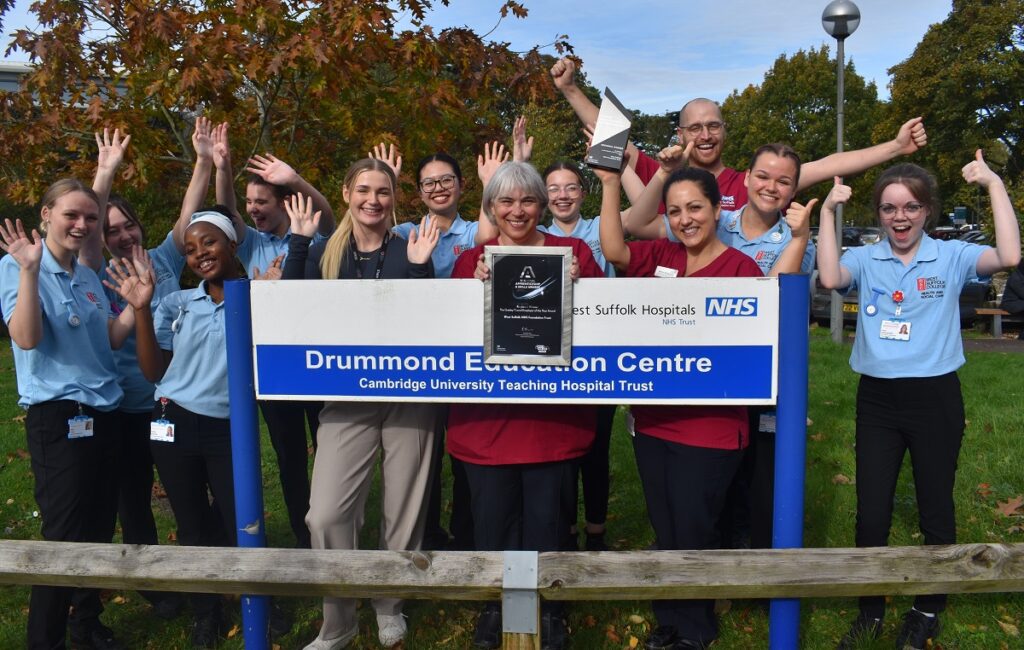
Applying for Apprenticeships and employment

An apprenticeship is for people aged 16 and over and combines paid work with training, allowing you to learn practical skills on the job while working towards a recognised qualification.
It is a popular option for students who want to continue learning while gaining real industry experience.
Students interested in applying for an apprenticeship or employment are supported throughout their time at Eastern Education Group. This support is provided through a range of events, workshops, classroom talks and one-to-one guidance sessions. We also organise regular careers fairs where students can meet employers and learn more about available opportunities. These events are also open to parents and carers, helping them to support students in making informed decisions about their future careers.
Apprenticeships and employment are great ways to begin your career after college. Both options allow you to gain valuable experience in the workplace while developing the skills that employers are looking for.
Starting a job straight after college is another pathway that allows you to build experience, develop confidence in the workplace and begin your career. Whether you choose an apprenticeship or employment, both routes provide opportunities to grow your skills, earn an income and take the next step towards your future career.
An apprenticeship is for people aged 16 and over and combines paid work with training, allowing you to learn practical skills on the job while working towards a recognised qualification. It is a popular option for students who want to continue learning while gaining real industry experience. There is a wide range of apprenticeship programmes; however, you need to find an employer before you can start an apprenticeship. You will have a formal contract of employment with your employer, and your time will be split into 80% work and 20% learning. This learning can be delivered either through day release to college or in the workplace as protected study time.
Apprenticeships can typically take between 12 and 48 months to complete, depending on the level and qualification you are studying.
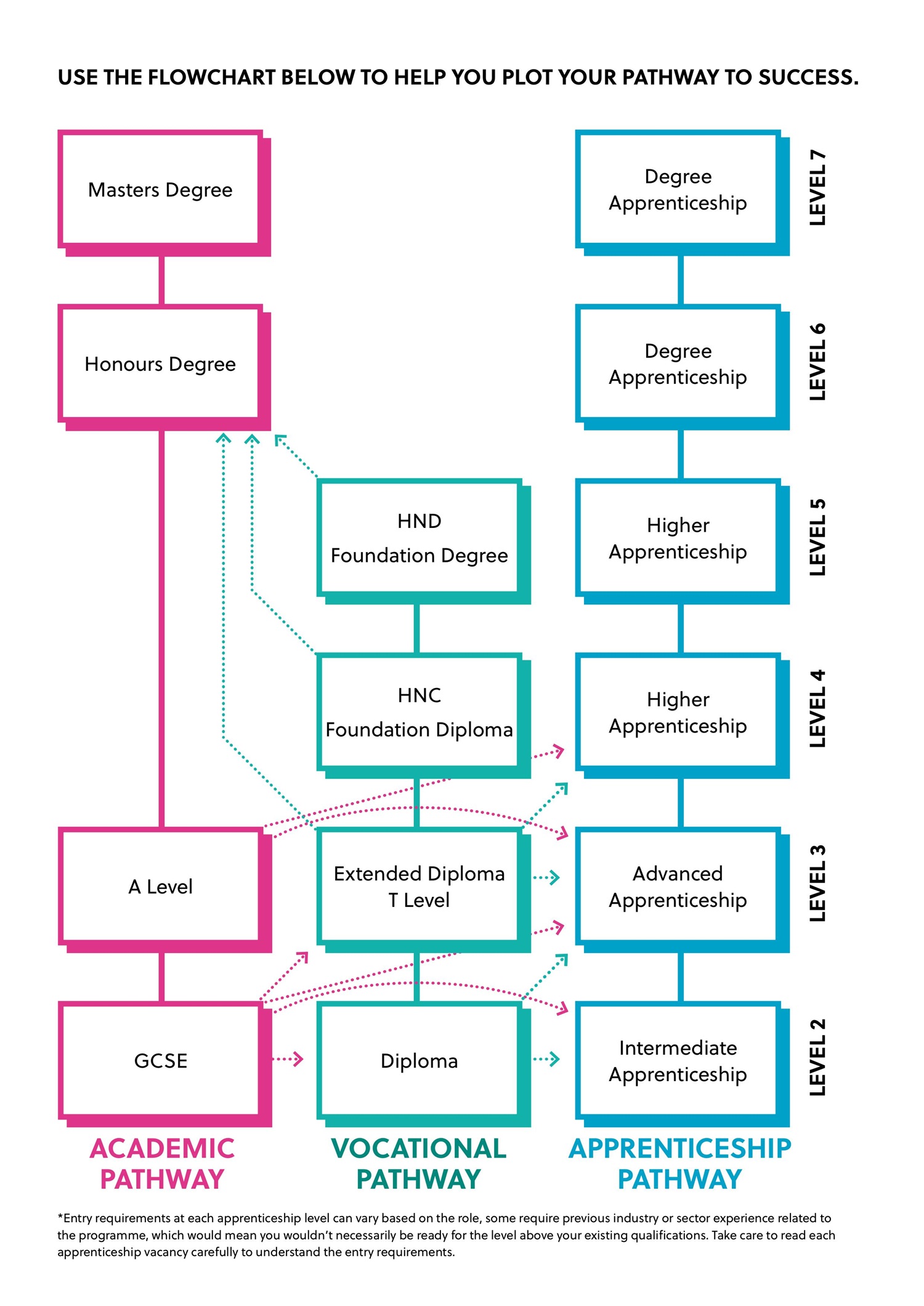
Apprenticeships in the UK are divided into levels based on difficulty and the qualification you achieve. Each level is roughly equivalent to a traditional education qualification.
Level 2 is called an Intermediate Apprenticeship. It is equivalent to GCSEs and is usually for beginners who are starting in a job role and may not yet have many qualifications. These apprenticeships normally take about one year to complete.
Level 3 is called an Advanced Apprenticeship. It is equivalent to A levels. This level involves more skilled work and responsibility. Many people start apprenticeships at this level after finishing school at age 16 or 18.
Levels 4 and 5 are Higher Apprenticeships. These are equivalent to a foundation degree. They are designed for more technical or supervisory roles. Employers will usually look for GCSE’s and Level 3 qualifications such as A Levels, T Levels or a BTEC diploma.
Level 6 is a Degree Apprenticeship. Employers will usually look at GCSEs and Level 3 qualifications, such as A levels or a BTEC qualification. It is equivalent to a bachelor’s degree. Apprentices work while studying for a full university degree, usually over three to six years.
Level 7 is the highest level of apprenticeship. Usually, you will need a bachelor’s degree or an equivalent Level 4 qualification or above, along with a number of years of experience. It is equivalent to a master’s degree and is aimed at high-level professional roles such as senior leadership or specialist careers.
Overall, apprenticeships allow people to work, earn a salary and gain recognised qualifications at the same time.
Get in touch with our Careers Service

Monday to Thursday 8.30am to 4.30pm, Friday 8.30am to 4.00pm
Abbeygate Sixth Form College
One Sixth Form College
West Suffolk College
Eastern Education Group is a proud member of Youth Employment UK
- Giving young people a voice on the youth employment issues that affect them
- Supporting young people with the skills and career support they need to progress
- Supporting employers to develop and be recognised for their commitment to the Good Youth Employment Standards
- Connecting young people to quality jobs and opportunities from our Members
- Providing expert insight across all youth employment policy areas