

Advice and Guidance
Your Futures Journey
Pre-college to post-college: a step-by-step guide.

Before your start college

Starting college

During your course

Planning your next step

Life after college

Book an appointment

Before you start College
Exploration and choosing the right course
What students should do:
- Think about interests, strengths, and favourite subjects
- Research career ideas
- Attend college open events
- Explore courses and entry requirements
- Talk to careers advisers and teachers
- Gain work experience or volunteering if possible
Whichever College or Sixth Form you are considering, start by looking at their website. You will find information on courses available, what the entry requirements are and what you can expect to study.
The Futures Team would always recommend you visit the College or Sixth Form you are thinking about applying to. Open Days give you a really good idea of what the building is like, you get a chance to meet the staff and the students and you can ask any questions to help decide if it is the right place for you.
The Futures Team are available for you to speak to at every College Open Event, so please come and see us!
Starting College
Settling in and setting goals.
What students should do:
- Attend induction activities
- Find out where the Futures team are located
- Set career goals
- Learn about enrichment opportunities
- Start building employability skills
Whilst it might feel early to start thinking about life after College, the Futures Team are available from Day One to provide advice and support for your next steps.
Drop in or book an appointment, you might even see us in class!


During your course
Building skills and experience.
What students should do:
- Take part in work experience or industry placements
- Attend careers workshops and employer talks
- Build a CV
- Develop transferable skills
- Speak to careers advisor
There will be plenty of opportunities offered to you during your course so help you build your skills and experience. Some of these will be mandatory whilst others will be voluntary. This includes: Industry Placements, Employer events and visits, competitions and projects and volunteering opportunities.
The Futures Team recommend that you take advantage of all of the experiences available to you. There will never be a better time to gain this valuable insight.
Planning your next step
Decision making and applications.
There are various progression routes that you can explore. These include:
- Progression to another course/level
- University
- Apprenticeships
- Employment
- Gap years
What students should do:
- Write a CV or personal statement
- Apply for University through UCAS (if relevant)
- Search apprenticeship vacancies
- Attend careers fairs
- Practice interviews
- Speak to a careers advisor
The Futures Team can help you with all Progression routes – so please come and see us.
Tap the image below to expand.
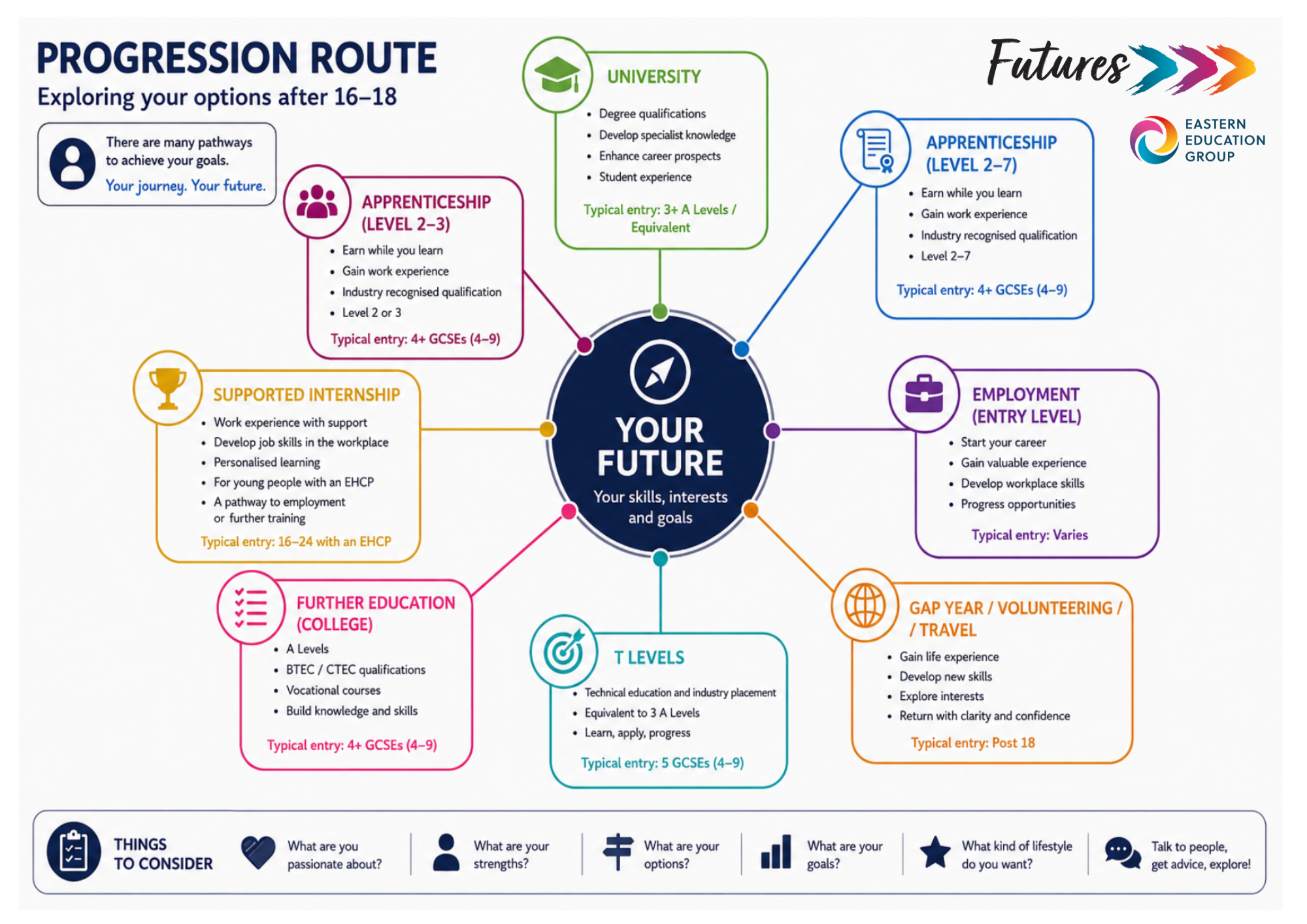


Life after college
Careers aren’t linear. Most people change direction, learn new skills and try different roles throughout their working lives.
The Futures Team can continue to support you as you continue your progression journey. We can meet with you to discuss:
- Further training
- Career changes and development
- Support with Higher Education
For existing students only
Book an appointment
Not sure what your next steps should be? Our careers guidance service offers personalised advice, helpful resources, and support to help you explore your career options. We support our students in discovering their interests and developing skills to make confident decisions about their future. Whether you’re choosing a course, applying for jobs, or considering an apprenticeship, we’re here to guide you every step of the way.
If you would like more guidance, then please either drop into the Futures Zone or scan the QR code on the posters around the College.
Getting advice and guidance
Types of advice and guidance available
Did you know that there are lots of ways that students can access Careers Advisors. These include:
- Drop ins – ideal for a quick question
- 45 minute appointments – when an in-depth conversation is required
- 20 minute appointments – perfect for one key careers question
The team are also available at lots of other points within your student journey including in your classroom, at careers events and more.
What to expect in an appointment
Our team of Careers Advisors are here to offer personalised guidance and practical support to help you plan your next steps, whether that’s an apprenticeship, further or higher education, or the world of work. During a careers appointment, your Careers Advisor will help you explore your interests, skills, strengths and qualifications, and discuss the opportunities available to you. Together you can look at different career options, courses, apprenticeships or university routes, and create a plan for your next steps.