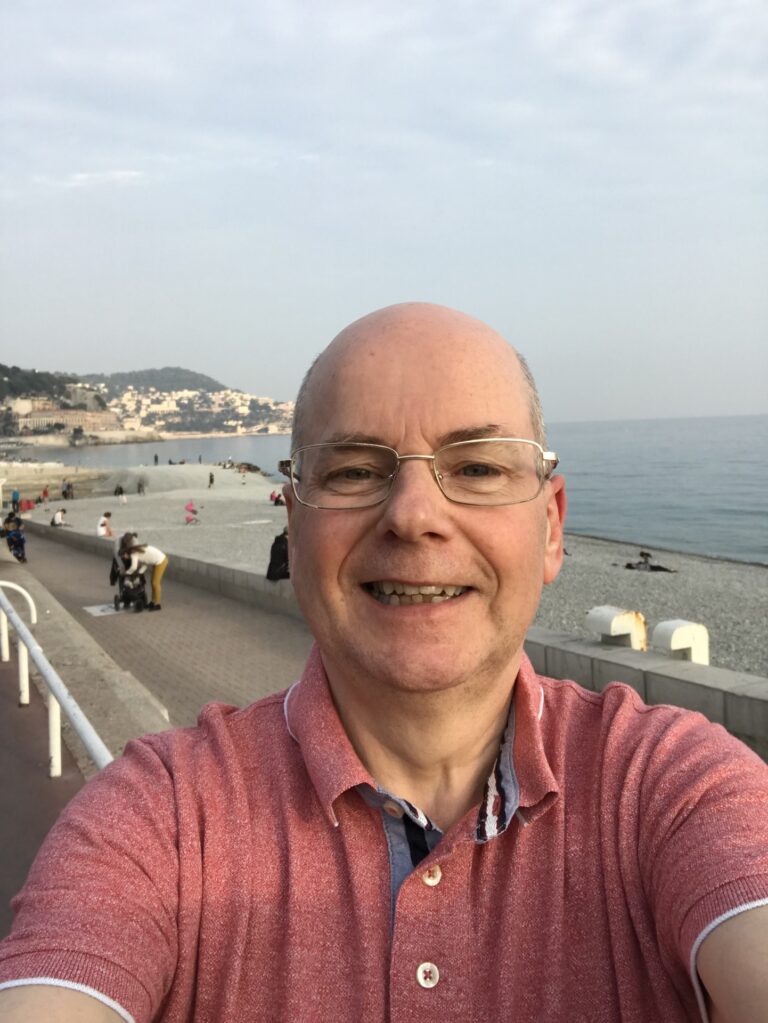

Tom joined Eastern Education Group in 2023, after deciding that A-levels did not suit his way of learning. Starting the Business Level 3 BTEC course a few weeks late, he thrived – taking full advantage of the additional qualification offered, industry experience, trips and networking. This enabled him to progress directly into an accountancy and audit apprenticeship at RSM UK when he left West Suffolk College. He puts his success down to the knowledge he gained during the course and industry placement. He has since returned to the College to give talks to current Business students about his pathway since leaving West Suffolk College.
What made you join Eastern Education Group?
In September 2023, I initially began studying A-levels. However, after half a term, I realised that the teaching and assessment styles didn’t suit my learning preferences. Around that time, a friend who had started at West Suffolk College told me about the Level 3 Business course he was taking, which included an additional qualification affiliated with the London Institute of Banking and Finance (LIBF). His experiences and comments encouraged me to make the switch.
The business department at WSC strongly encouraged industry placements, and I was fortunate to secure a six-month placement at the British Racing School. I worked closely with the Director of Finance and the Director of Fundraising, gaining hands-on experience with finance and business concepts that aligned with our coursework.
The first year of the course was broad, covering topics such as business law, marketing, and finance. After completing Year 1, I chose to specialise in finance and accounting by selecting the Business, Accounting and Finance (BAF) pathway for Year 2.
Do you have any special memories from your time with us?
I have many great memories from my time at WSC. One of the most memorable experiences was a trip to London that included a guided tour of the financial district and the Bank of England, offering perspective on how historical events have shaped the area’s role in global finance. We also visited the LIBF University, where industry professionals gave practical advice on navigating careers in finance and highlighted the skills that employers value most. During the visit, I was awarded a scholarship in recognition of achieving one of the highest grades nationally.
Another highlight was being selected to join an Investment Banking team that competed against 8+ other schools in the region. We were tasked with designing an investment portfolio and presenting our rationale to a panel of judges. Our team won the competition, which was a proud moment given the high level of competition.
One of the marketing modules involved planning and hosting an event. Our class organised a sustainability-themed breakfast and networking session for local SMEs, where businesses shared how they were adopting more sustainable practices.
What did you go onto to do after college?
After completing my Level 3 Business diploma at WSC, I began an apprenticeship at RSM UK – a leading accounting, tax, and consulting firm based in Cambridge. I work within the audit service line, working with a diverse range of clients across industries such as manufacturing, technology, healthcare, and retail.
Alongside my role, I’ve been studying towards professional qualifications. I completed my Level 4 AAT in June 2025, and I found that the accounting modules at WSC gave me a strong foundation that made the transition much smoother. In September 2025, I began the Level 7 ICAEW Associate Chartered Accountant (ACA) qualification.
The knowledge I gained during my course and industry placement has been incredibly valuable in my current role.
Is there a message you would like to share as we celebrate our 100 years of history?
Big thank you to Shannon Grooms and Daniel Connor for the help and support they offered during my time at WSC. They played a key role in helping me adjust from A-levels to WSC life, and their organisation of various events and trips added useful context to what we were learning on the course.
Lastly, do you have any advice for future students and staff at EEG?
Always be curious and don’t hesitate to ask questions that help you understand how and why things work.
Try to gain as much work experience as possible – it’s one of the best ways to connect with professionals in your field of interest. They can offer insights into their career paths and what their day-to-day work is really like.