
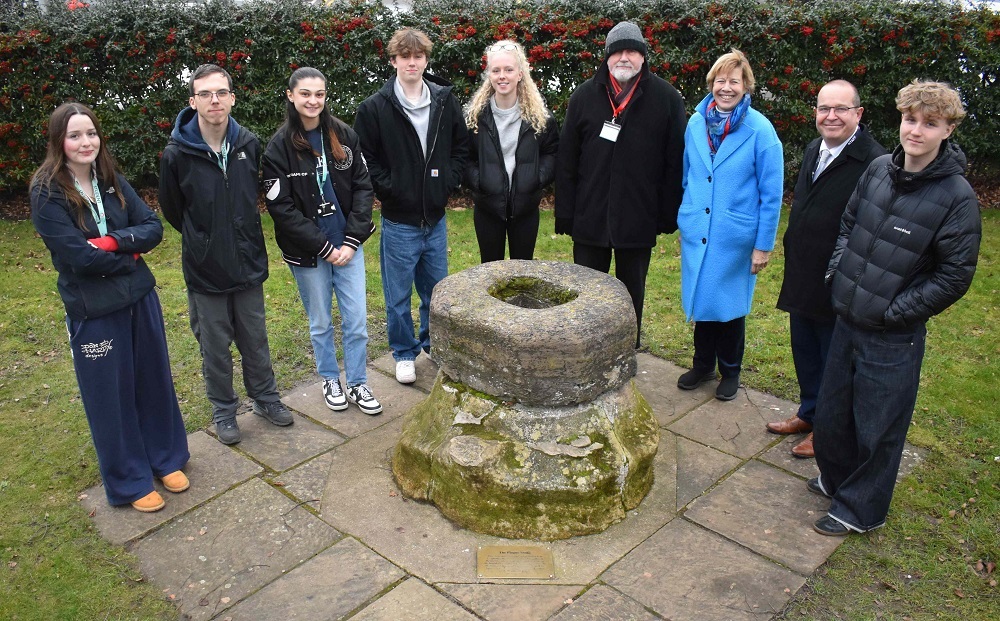
Eastern Education Group has created a lasting tribute to an iconic piece of the history of Bury St Edmunds.
Staff were approached by local resident Melanie Lesser to see if they could create a plaque for a plague stone situated on Out Risbygate Street in Bury St Edmunds.
The Plague Stone according to legend was put in place when smallpox was raging in Bury in 1677. The top of the stone was filled with vinegar so that people going home from the town market could wash their coins in it, to stop the spread of infection.
As a result of these discussions, Colin Shaw (Group Sixth Form Principal) and Shane Langthorne (Group Deputy Principal) organised for a new plaque to be placed by the stone so that passers by knew exactly what the stone was for and why.
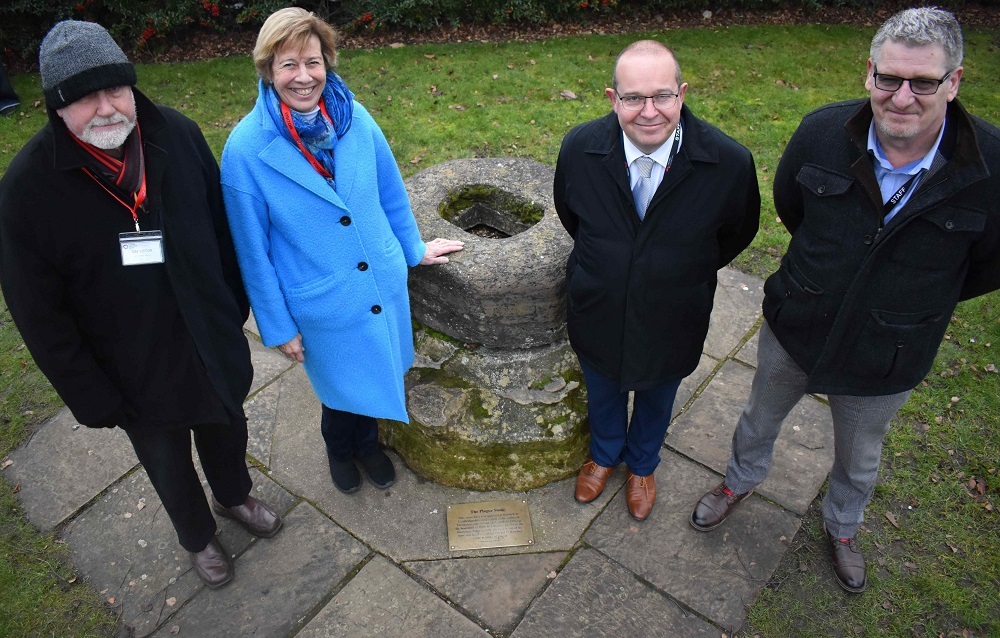
The new plaque was then unveiled in front of residents, students and staff this week.
And local historian Martyn Taylor was on hand to chat to learners studying at West Suffolk College to explain the background.
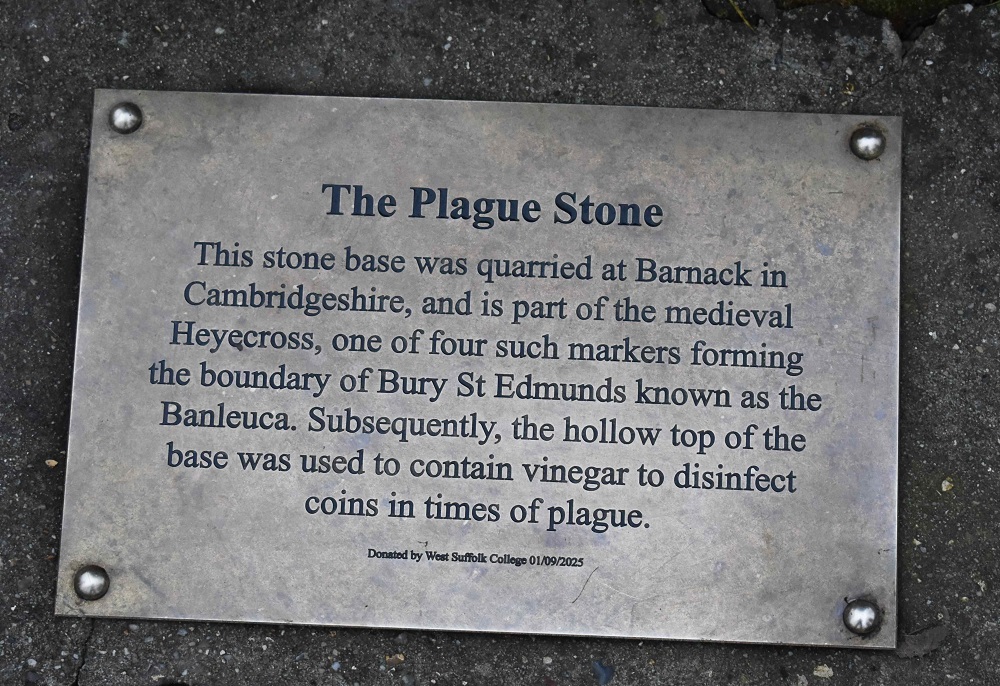
Martin said: “The stone is one of the original markers for the boundary of Bury St Edmunds. There were four boundary markers, and this is one of them and it was called The Haycross. The stone used to reside outside Chalk Road and now it is by West Suffolk College. I’m passionate about keeping history alive.”
Melanie said: “There was a plaque that was at the stone before, but it was not legible and it was also inaccurate – so Martyn rewrote the wording – and the college did the rest. We were delighted when the college said they would do this with their students as it is a very important part of Bury St Edmund’s history. It’s a brilliant piece of information for everyone to read. The college is doing really well and it was lovely to be involved in this project.”
Shane Langthorne from the college said: “We were approached and we are very keen to promote heritage in the area. Therefore, we are incredibly proud to support the making and creation of this plaque so that others can see the importance of this landmark. In my opinion, history needs to be celebrated.
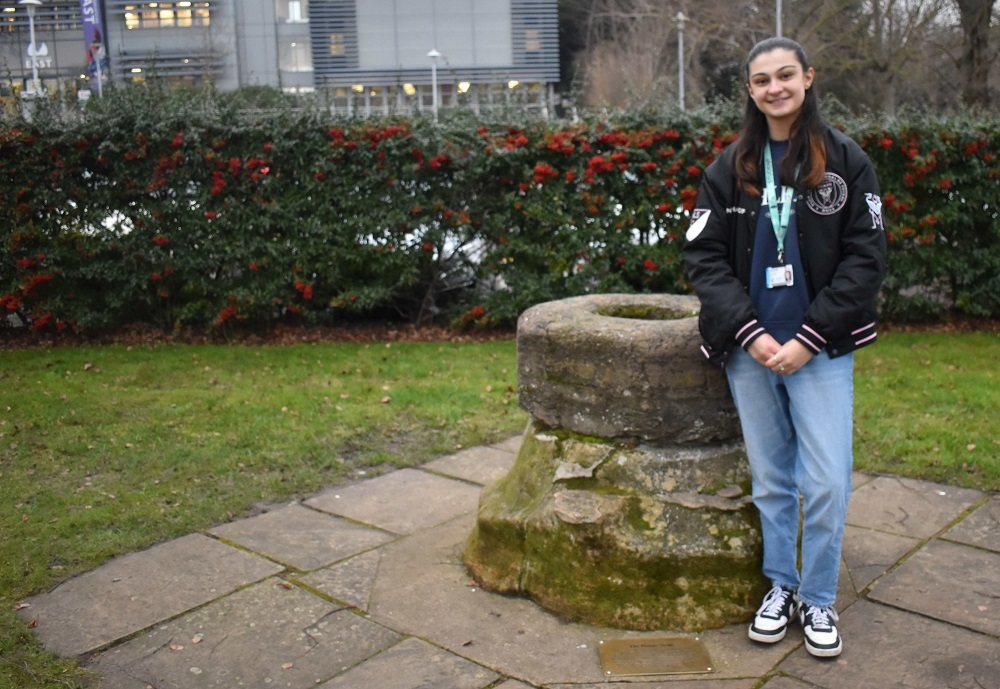
Gemma Davinson, 21, from Bury St Edmunds is on a level 3 animal studies course. Gemma said: “I think it’s really interesting and it’s good to promote the town’s history to students.”