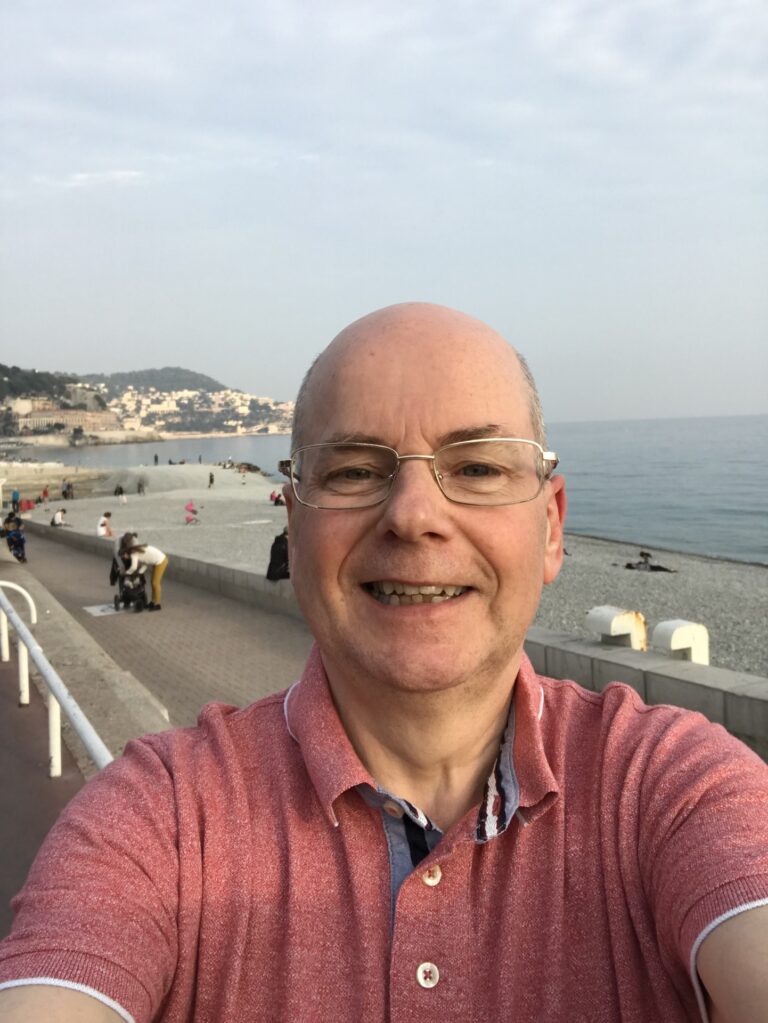

Richard Carter became a Governor of West Suffolk College in 2001 and the Chair of Governors in 2011. He oversaw the College during a period of significant development and financial challenges to the further education sector. He led the appointment of the current CEO Nikos Savvas, oversaw the creation of the Suffolk Academies Trust, which brought One Sixth Form College in Ipswich, and the creation of Abbeygate Sixth Form College in Bury St Edmunds into the fold. During his time as Chair, the Milburn Centre was opened, the Gateway building was completed, and the former Vintens factory site – which now houses Higher Education, Apprenticeships and Adult Learning – was purchased. Richard was awarded an MBE in 2018 for his services to education.
What made you join Eastern Education Group?
I was invited to join the Governing Body. My background is in journalism, communications and public relations, and at the time the West Suffolk College Corporation considered that it had an image problem.
I became a Governor in 2001 and Chair of Governors from 2011, until I left in 2017 as a result of my introduction of limited terms of office for Governors, so that there would be a steady introduction of new people around the table. I was the first Chair of the Members of SAT and a Member of SENDAT.
I was only the third Chair of Governors since the Incorporation of West Suffolk College brought about its independence from local authority control. The first Chair, Richard Stewart, who died in December 2024, recruited me and I succeeded Betty Milburn. The late Ken Golding took my place followed by Elton d’Souza, the current Chair.
Why did I join? I suppose for a number of reasons. I didn’t go through the university system; instead, I did my post-A-level education to become a journalist, at what was then a technical college, so I felt I had an affinity with the sector. I was also, at the time, a Board member of a social housing organisation – of which I later also became Chair – and I felt the two had a synergy: how could a young person focus on their education if they didn’t have a decent, secure home to live in? And who could best provide that post-school, mainly practical teaching needed to develop their knowledge and skills, but the local FE college?
I was flattered, proud and daunted to be asked to join a group of similarly minded people, who between them had a very wide range of professional and life experiences and who worked hard to be sounding boards and the critical friends of the education professionals on whose shoulders the real responsibility lay.
Do you have any special memories from your time with us?
The life at a college throws up special memories almost every day. The more engrossed I became in college life, the more interesting it became.
As Chair of Governors, I always made a point of attending the final presentations made by students on the Prince’s Trust courses. I saw dedicated members of staff working closely and sympathetically with young people, who in many ways had already had to overcome major struggles in their lives. I saw how even a short course could help to turn their lives around and enable them to look forward to a positive future. There was a young woman who had arrived so painfully shy she could hardly speak, but could now stand in front of an audience of strangers and tell her story. There was a young man who had been made to feel that he would never make anything of himself, about to embark on a training course with a major retail chain. The stories I heard were always motivating, often heartbreaking. It was a salient good reminder of what we were all there for.
I introduced a series of opportunities for governors to sit in on activities across the College. Among other things, I attended night classes teaching English as a Foreign Language in Sudbury, painting and decorating, carpentry, and electrical and plumbing training at the Milburn Centre. It put us in among the students, teachers and lecturers, and helped to keep our decision-making relevant to them. I went to as many open days as possible to talk to prospective students and their parents about their hopes and aspirations.
At a more technical level, I modernised governance at the College and introduced a traffic light system of performance indicators, which was developed with my colleagues so that we could easily see how the College was performing against expectations and be in a better place to ask questions and discuss solutions with the senior managers.
Ann Williams was the Principal of the College for most of my time as a Governor, but when she retired it fell to me as Chair to lead a small committee to appoint her successor.
It was the College’s great fortune that among the candidates was Nikos Savvas. He came with an understanding, a vision and a vigour that we were looking for to drive the organisation forward. His leadership is always focussed on how to best serve the needs and aspirations of as many young people as possible, as well as those of mature students, as they seek to develop their knowledge and careers.
It is his inspirational leadership that has made Eastern Education Group the ‘Outstanding’ organisation that it is today, and I feel proud of the part I played in bringing him to Suffolk and supporting him in his early years here.
Could you tell us the story of the founding of SAT and the beginning of the EEG?
The Suffolk Academies Trust came about as a result of the decision by the government at the time to improve standards of education by releasing schools from local authority control into the arms of suitable independent educational organisations. It did not take long before School Academy Trusts, large and small, were springing up around the country including in Suffolk.
It became the strategic objective of the College to use its ethos, expertise and commitment to excellence to help other like-minded organisations. The most obvious place to start was in the post-16 sector with sixth form colleges, and, with this in mind, the new One Sixth Form College on the outskirts of Ipswich became the first component of SAT.
It was felt that Bury St Edmunds needed a bespoke sixth form college, and at the same time some secondary schools were reviewing their structures in the light of changes to their funding. The result was a coming together of like-minded schools and the College to persuade the Department of Education to invest in what is now the Ofsted ‘Outstanding’ Abbeygate Sixth Form College in Bury St Edmunds.
In recent years, other schools have joined SAT as well; most recently, SENDAT – an academy trust focused on provided outstanding education to pupils with Special Needs. The College already had a relationship with the SENDAT trust, and I was part of their original board of Members until recently.
Are there any family members who have connections to EEG?
My wife, Jill Carter was a student on a secretarial course at the college in the late 1970s.
What did you go onto to do after the EEG?
I am now retired but being privileged enough to be a Governor opened my eyes to the tremendous resource that West Suffolk College is to the people – especially the young people – that it serves. I now volunteer one day a week at Ickworth House, the National Trust property just outside of Bury.
Is there a message you would like to share as we celebrate our 100 years of history?
The key to fulfilled lives and healthy, open communities, is education and training; Eastern Education Group is a beacon for these things in our world. I would like to think that the people who got the ball rolling 100 years ago would be very proud of what their brainchild has become today.
Lastly, do you have any advice for future students and staff at EEG?
Make the most of the extraordinary opportunities you have at Eastern Education Group, and use them to help you fulfil your hopes and dreams.
Training and education are life-long. As your life changes and your careers, needs, hopes and aspirations grow, you can look to EEG for help and support; whether your chosen vocation leads you to studying for university degrees or to develop further your technical skills.
Good luck.