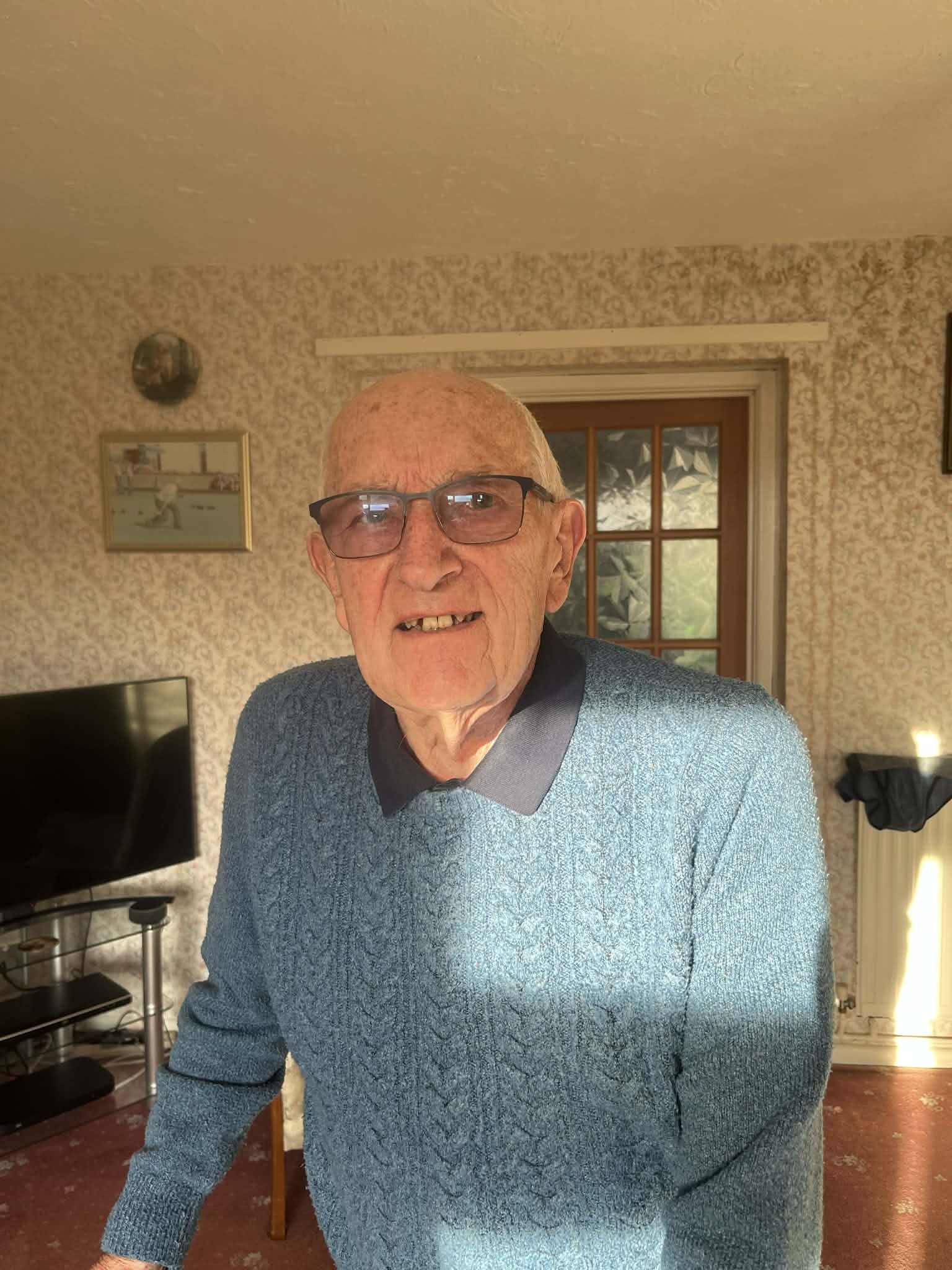
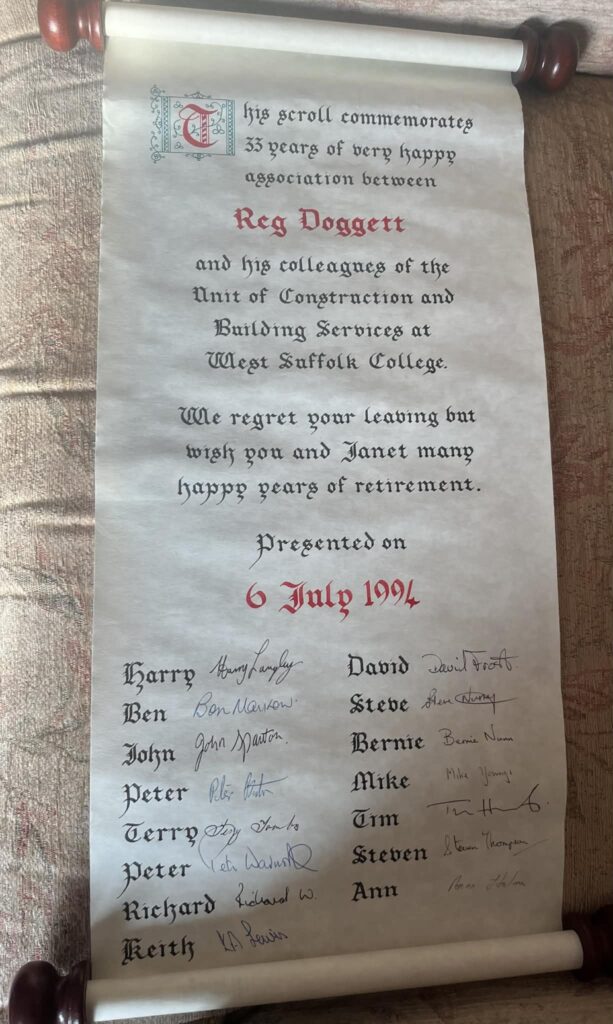
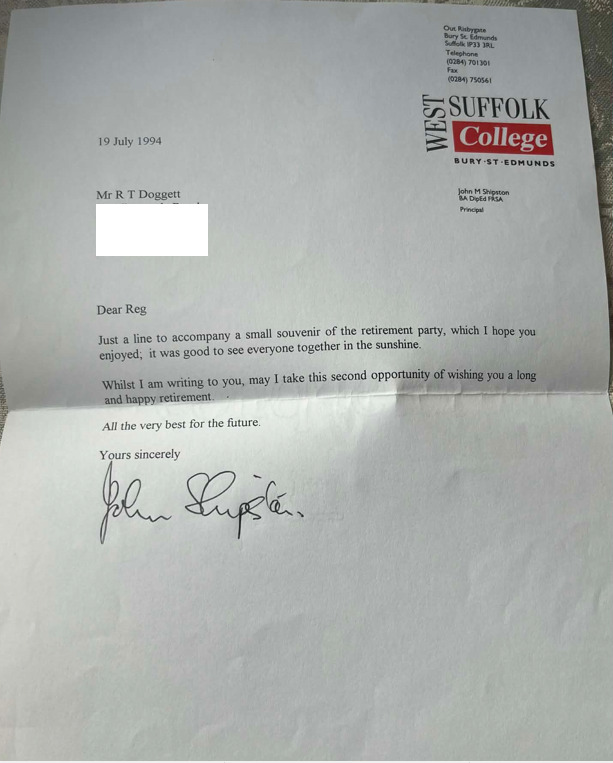
Reg joined West Suffolk College’s Carpentry Department in 1961. He recalls the early days of the Out Risbygate site, the construction of the extensions and the colleagues he worked alongside. He rose to become Section Head of Carpentry, before retiring in 1994. Reg continued to work in the department as an hourly paid lecturer until around 2001, when he finally retired.
What made you join Eastern Education Group?
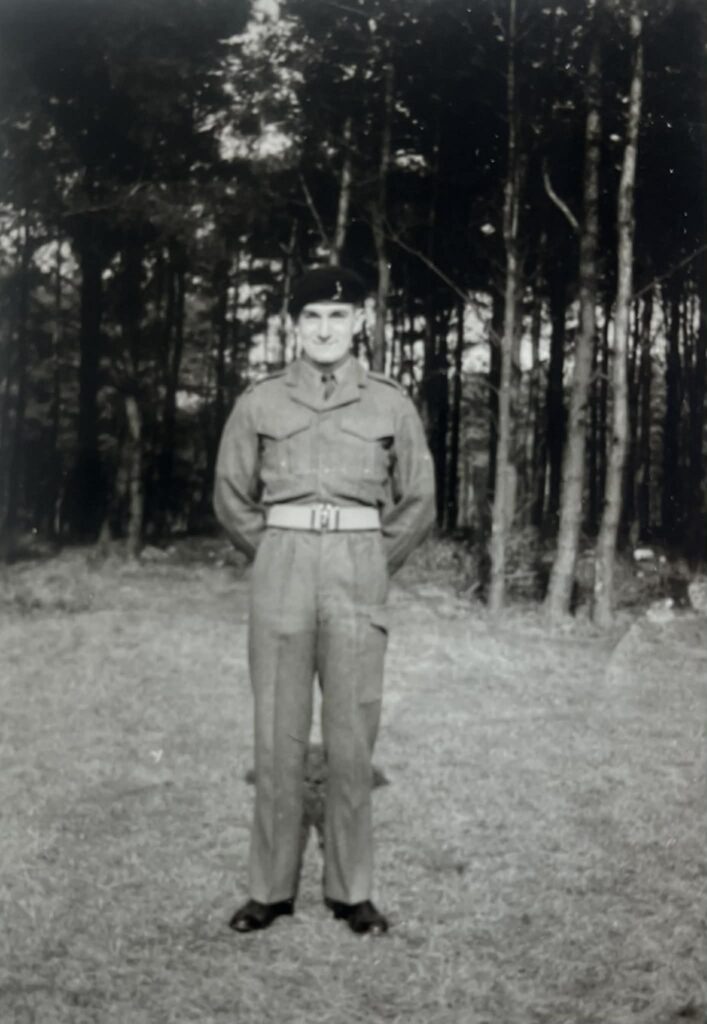
I started my career with a 5-year apprenticeship at Kidmans of Cambridge doing carpentry and joinery – but mainly joinery as I worked in a workshop. Interestingly, John Norris – who was later Vice Principal – had previously worked there, but I was not aware at the time. Then National Service for 2 years, including a posting to West Germany. While there, I was an active water polo player – indeed, I once swam for a team representing Germany and represented BOAR (British Army on the Rhine) against the RAF twice. For National Service, I trained in Catterick and Quorn near Leicester, and joined the Royal Signals where I learnt Morse Code. I became a Wireless Op.
When I left the army, I did nearly 2 years part-time teaching at the Cambridge Tech. They needed a lecturer, and the College came to Kidmens to see me. I did part-time lecturing from Christmas to June, and then Sept to June – 18 months. Then, I was told by my Cambridge colleagues that there were two jobs going – a Tech Dem job at Cambridge or a full-time lecturer job at West Suffolk College. My colleagues in Cambridge recommended that I go to WSC. The post had been readvertised in August as they had not appointed anyone. There were 4 others shortlisted, and I ended up joining in 1961 as an Assistant Lecturer Grade 1. Roy Long started at the same time as me but has since passed away. Also, Sid Broughton started the same day as me.
I retired in 1994, then came back as an hourly paid lecturer, eventually retiring fully around 2001.
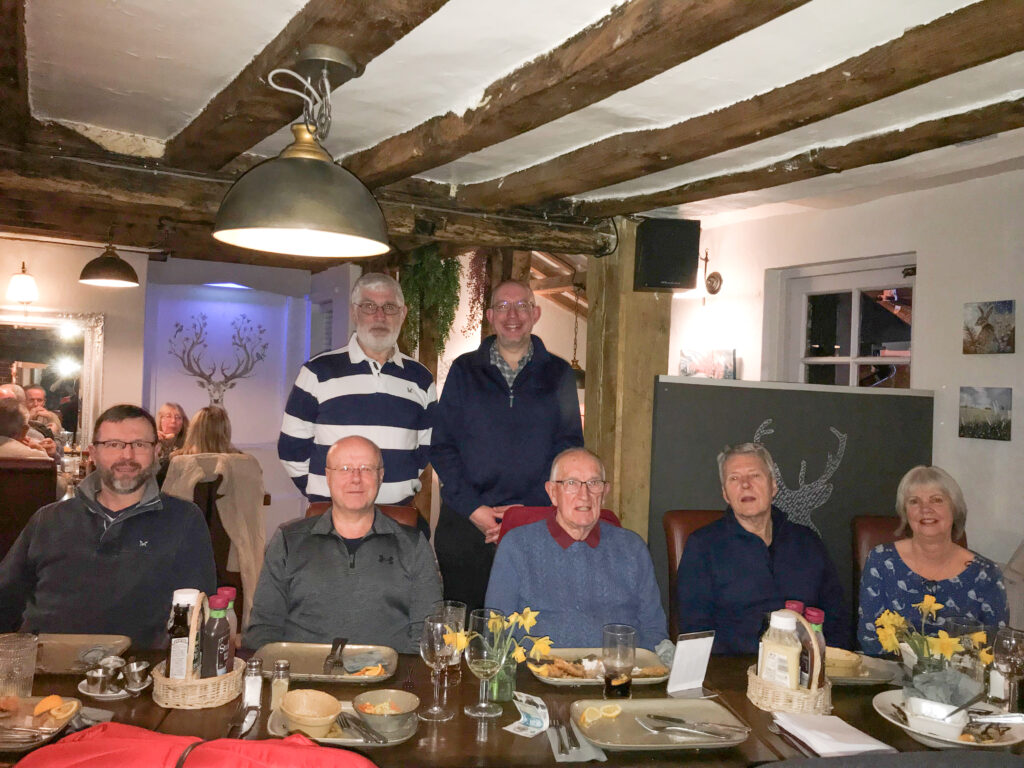
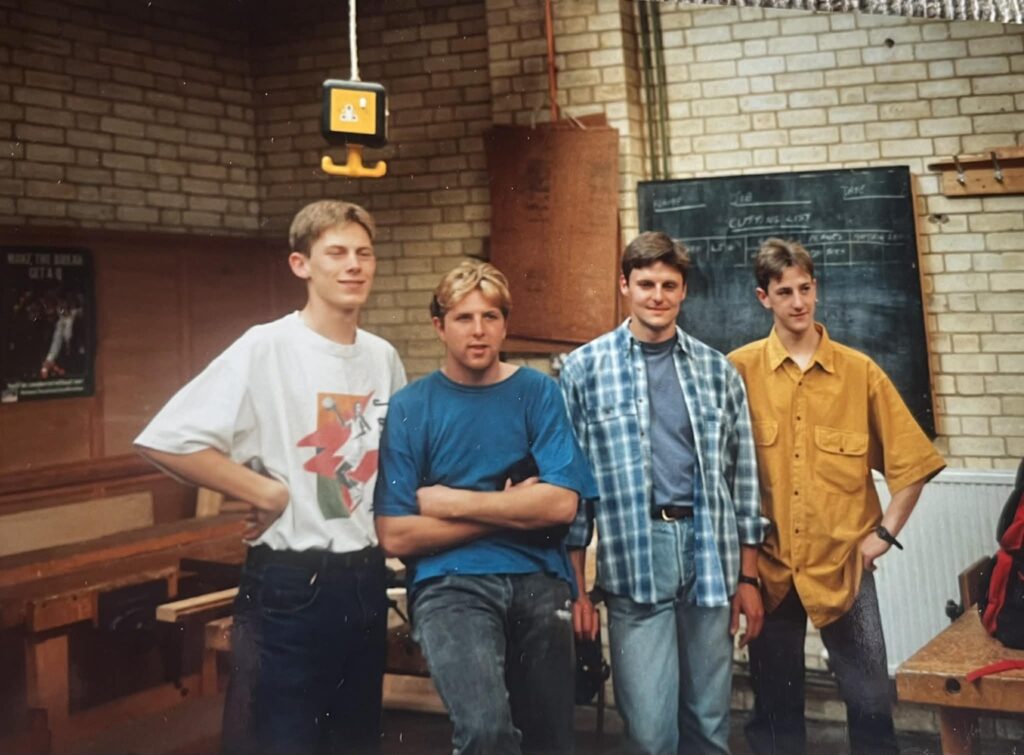
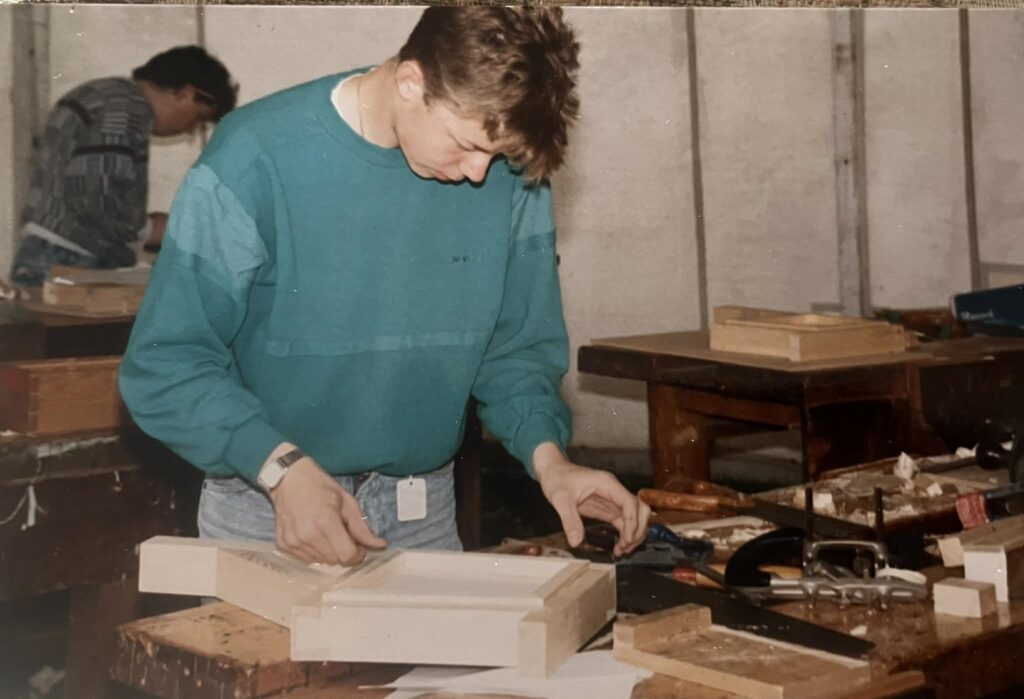
What was it like joining WSC in 1961?
When I arrived in 1961, it was very new to me; I’d never been a full-time staff member before, and at the Principal’s Meeting (for all staff) the new staff had to stand up and say their name and area in front of Principal Phillips. Back then, the College was a main building with the workshop behind – this was before Suffolk House was built. There were no holes in the barrack walls then.
I remember the period when the extensions were built, and that the area was sealed off. My students would practice climbing the ladders on the worksite. Unfortunately, one student practiced on the ladder and froze. He had to be coaxed down, which he eventually did.
Another memory was that I continued to commute to Bury until 1964, as I had stayed in Cambridge. A colleague, called Happy Barrett, used to get a lift with me. She used to work in the mornings and worked in Hair. When I first started, I had not passed my driving test, and I used to come in on my motorbike. Students would often wait outside the College and ask for a lift to Newmarket, which was enroute, which I would do. Unthinkable these days, especially as we didn’t even have helmets.
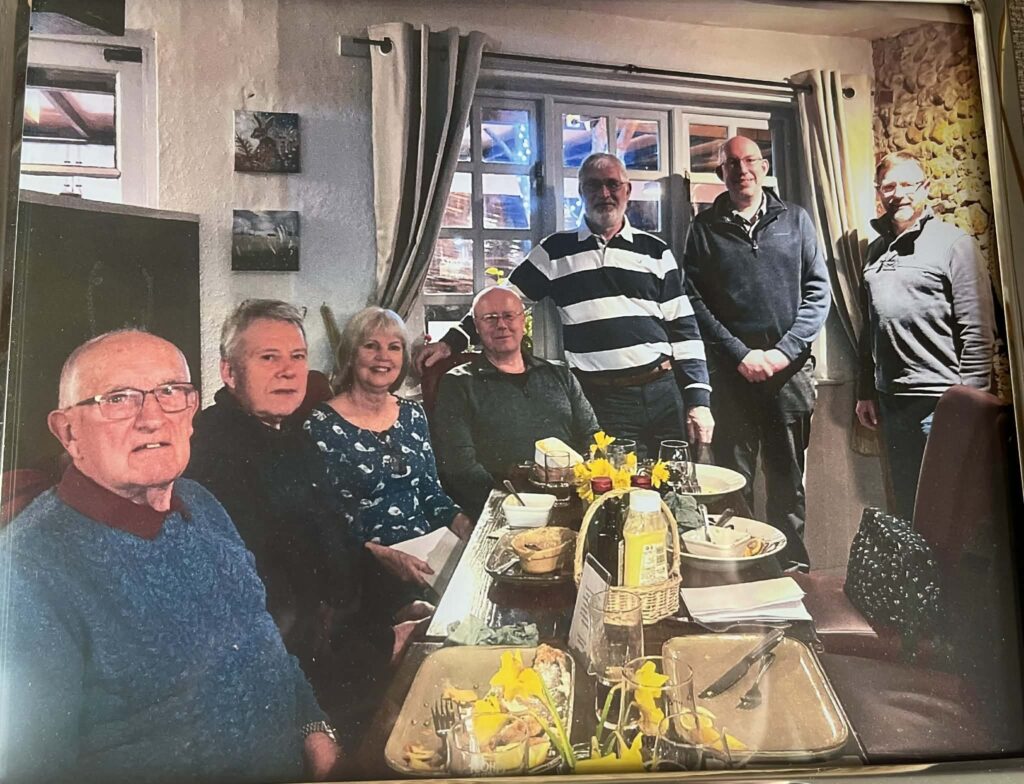
When I started, I recall my colleagues were: Joe Bradley (brickwork), Jack Clarkson (a plumber 2 days a week part-timer), for Painting and Decorating there was Freddie Farrow, who was also employed by Harvey Frost. Arthur Revett (Head of Engineering) loved golf and would give updates every Monday in the staff room of his games.
John Norris was Vice Principal and also Section Head of Carpentry. I was the third carpenter employed by the College: John Norris, then Tom Bryant, and myself. Tom also did the librarian work; he told me that when he was based in the Silver Jubilee School site, all he had for a library was the cupboard in the Tech building in the corridor. The library had a room of its own in the new college. Also, there was a Mr Dutton – who became a full-time librarian, possibly replacing Tom and Mrs Biggs – who was the treasurer side of the college. I did not have much to do with Principals Phillips or Storey.
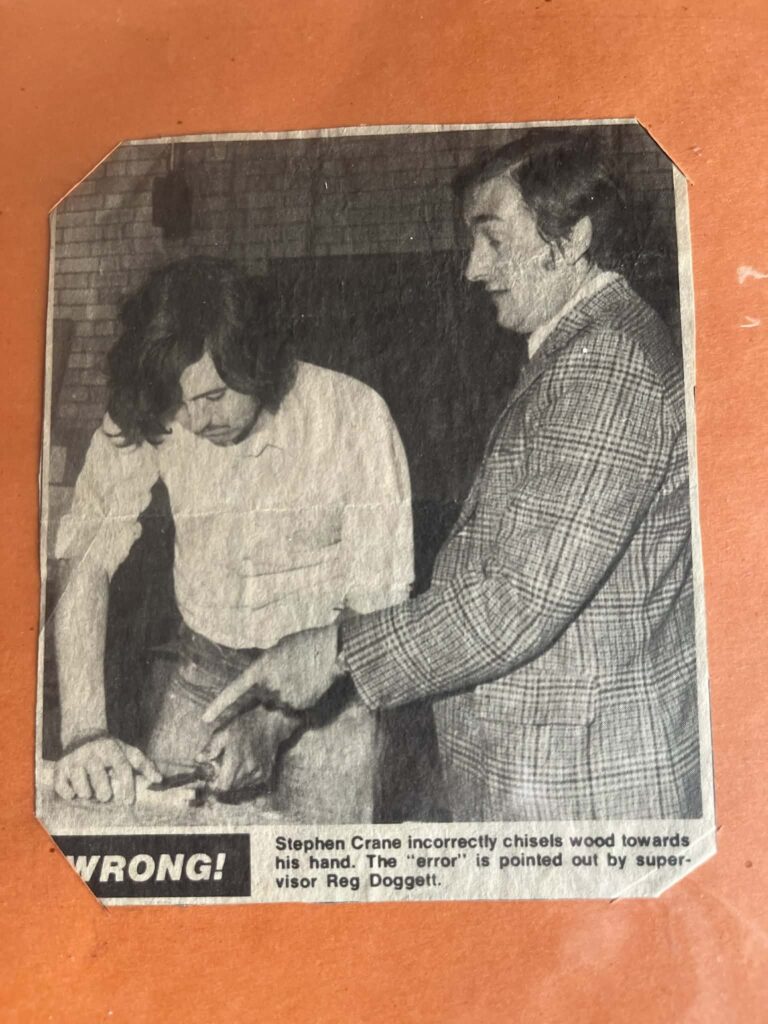
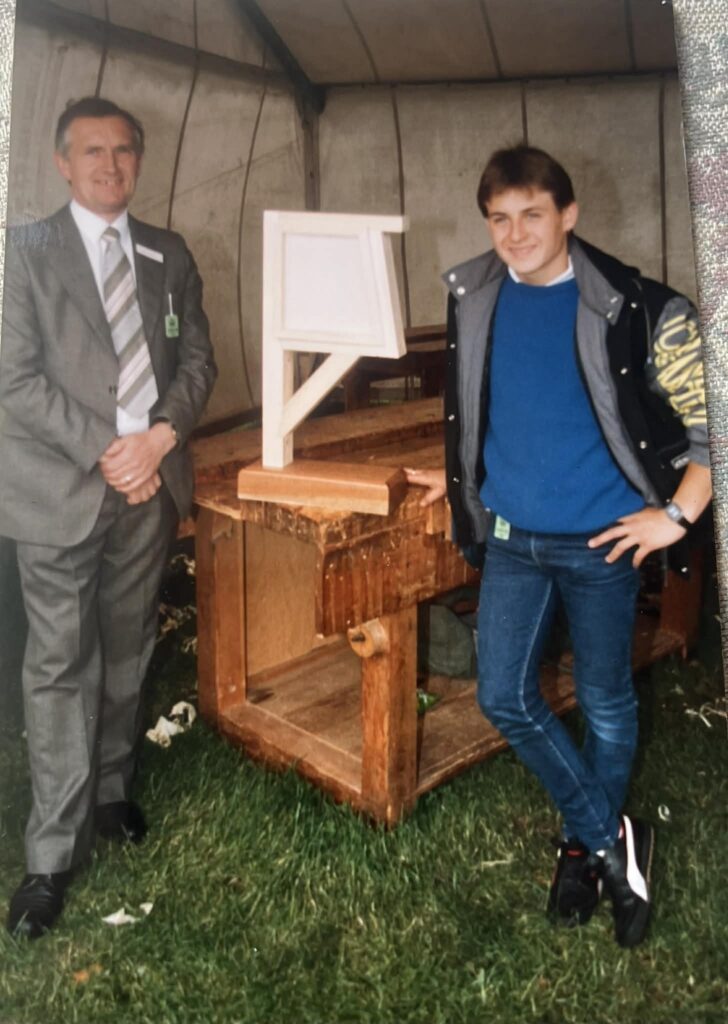
When i first got appointed, i met with Lou Booth to find out the subjects that i would be teaching. I got given science and maths. He was a very nice chap. I did the basic courses that were full-time which had a mixture of students doing different trades and also apprenticeship carpentry and joinery students on day release from building firms. They did a Craft Certificate over three years, another two years after to get an Advanced Craft Certificate. 90% of the course was benchwork, not like it is today. Benchwork means joinery. Once a month, we had an optional afternoon for various activities, we would watch an informational film on a projector, or I would bring the fire brigade in to demonstrate lifts. There were no toe protectors or safety boots when I first started.
I did not have much to do with Harvey Frost. He was a Governor of the College and would see the lads occasionally. He insisted that his employees did a full-time course at the College. After that, he would allow them to go into a 5-year apprenticeship with him.
I eventually became Section Leader of Carpentry. Ben Mayhew was a student who became a staff member. He would become Section Leader of Carpentry when I stepped down.
Do you have any special memories from your time with us?
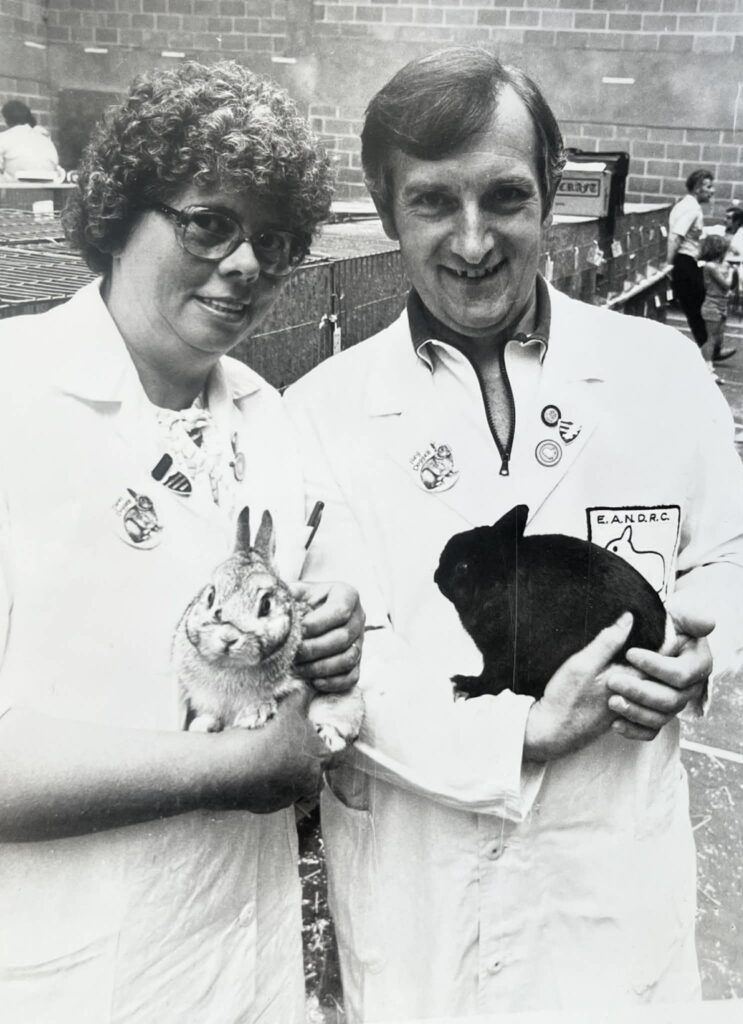
I enjoyed my time at the College, got on quite well with students. I have had former students come up to me and tell me their sons now come to the college. I seemed to be in the right place at the right time. One the family hobbies was breeding and showing rabbits – we were occasionally very successful.
What did you go onto to do after College?
Retired early at 58, but when back part-time and worked until I was 65. I got given money when I first retired and bought a microwave with it. I finally finished around 2001.
I used to play badminton at the College in Harvey Frost Hall and then became a bowls member for the local club, which I continued until recently.
Is there a message you would like to share as we celebrate our 100 years of history?
We taught to a high standard, and I hope we continue this.
Lastly, do you have any advice for future students and staff at EEG?
Work hard and keep your head down.